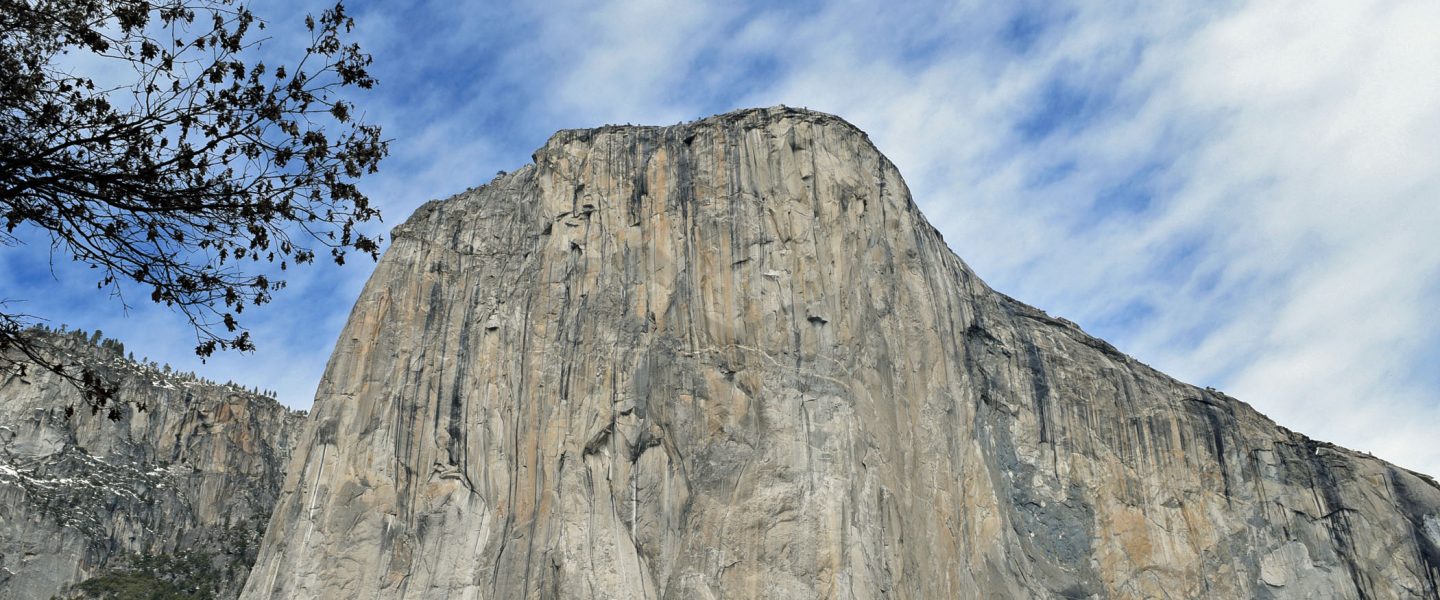

July 18, 2014
Bridalveil Creek Trail, Yosemite National Park
Total distance walked: 6.6 miles
On many of Yosemite National Park’s more popular trails, it’s typical to cross paths with fellow hikers. On this hike, however, I encountered very few people. Perhaps it was because the route I chose lacked a definite destination—no serene lake, no picturesque riverbank, and no breathtaking vistas to savor. Yet, there were unmistakable signs that I wasn’t alone on the trail.
I eased the car into the dusty parking lot, where trucks with horse trailers filled the shaded, wooded area. As I started out, two black birds circled overhead, their squawks echoing through the trees.

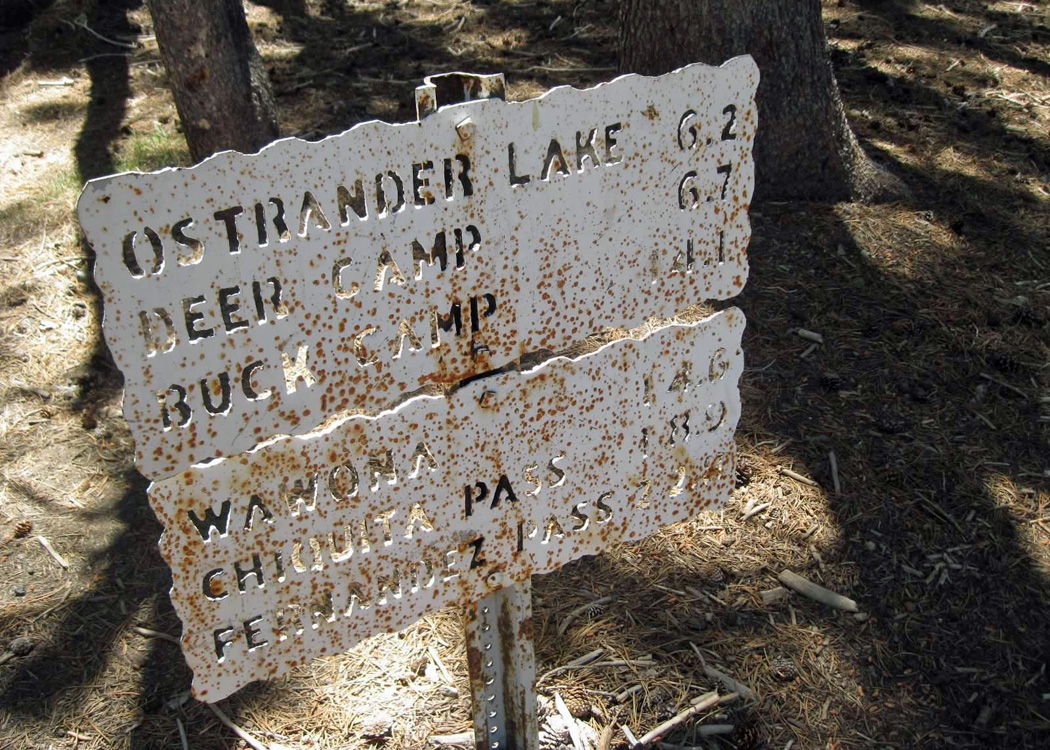
My path followed the Ostrander Lake trail for a brief stretch before veering off in the opposite direction.
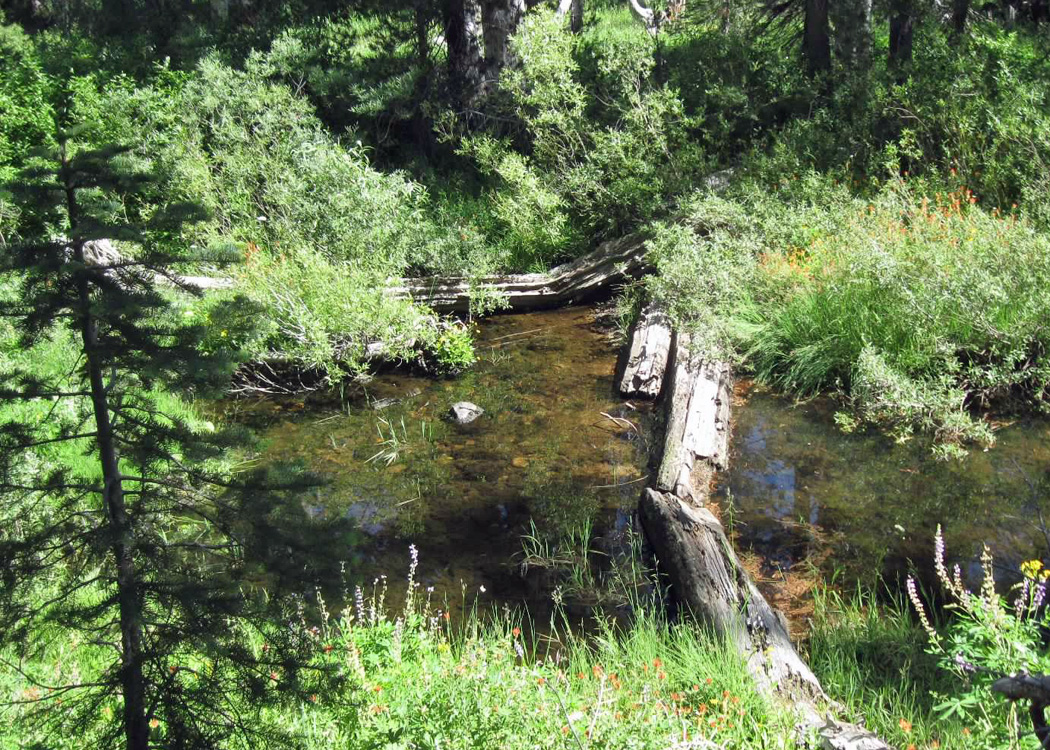
Today’s walk meandered alongside the elusive Bridalveil Creek. Mostly hidden from view, I was aware of its presence winding through the dense undergrowth below the trail.
The walk was easy, passing through a forest slowly regaining its life after a devastating fire years ago. This was familiar terrain—ground I had traversed on my way to Ostrander Lake before. I was astonished by how much the trees had grown in the four years since my last visit.

The trail alternated between sandy meadows brimming with wildflowers (I counted 26 types of wildflowers), open rocky patches, and dense forest areas strewn with dead wood.

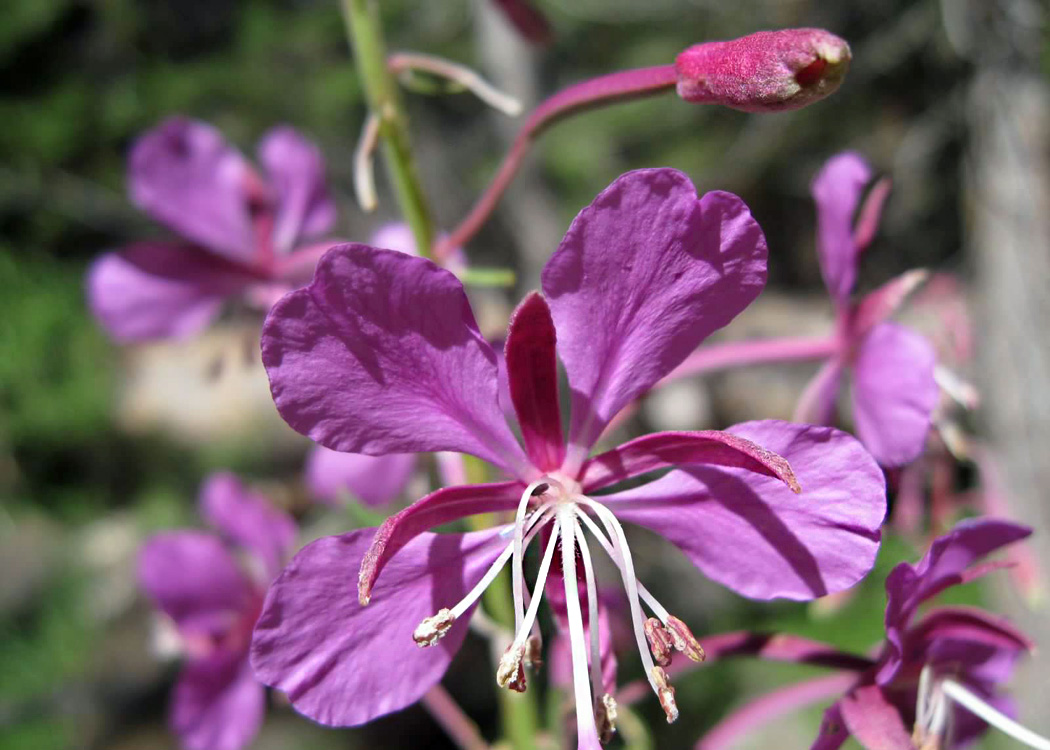
Stalks upon stalks of brightly colored fireweed lined the path—a plant that only thrives in the aftermath of forest fires.
Savoring the cool air and ambling along the well-defined path, I discovered new flowers I hadn’t encountered before. It was monkshood. These flowers aren’t commonly found in large clusters. I spotted two of them at different points along the trail.


The trail was lined with twinberry honeysuckle shrubs, also known as bearberry honeysuckle. These berries are a favorite snack for bears. It was my first time seeing this plant adorned with both blooms and berries.


Close to the berries, I found evidence that I was sharing the trail with a bear.

I heard various bird calls—perhaps birds communicating with family members or alerting them to my presence. One unassuming bird, however, literally shared the trail with me, running along the ground and following the path through the forest. Throughout the day, several small squirrels did the same. Swarms of fritillary butterflies fluttered away as I walked through their perennial feeding ground.
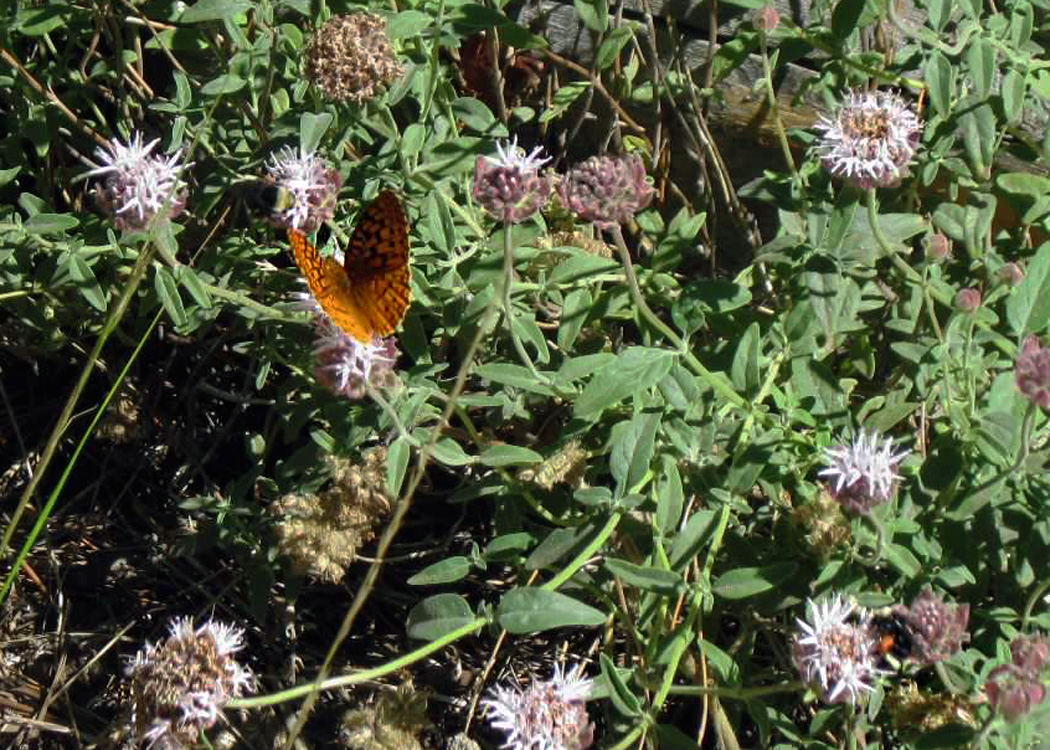
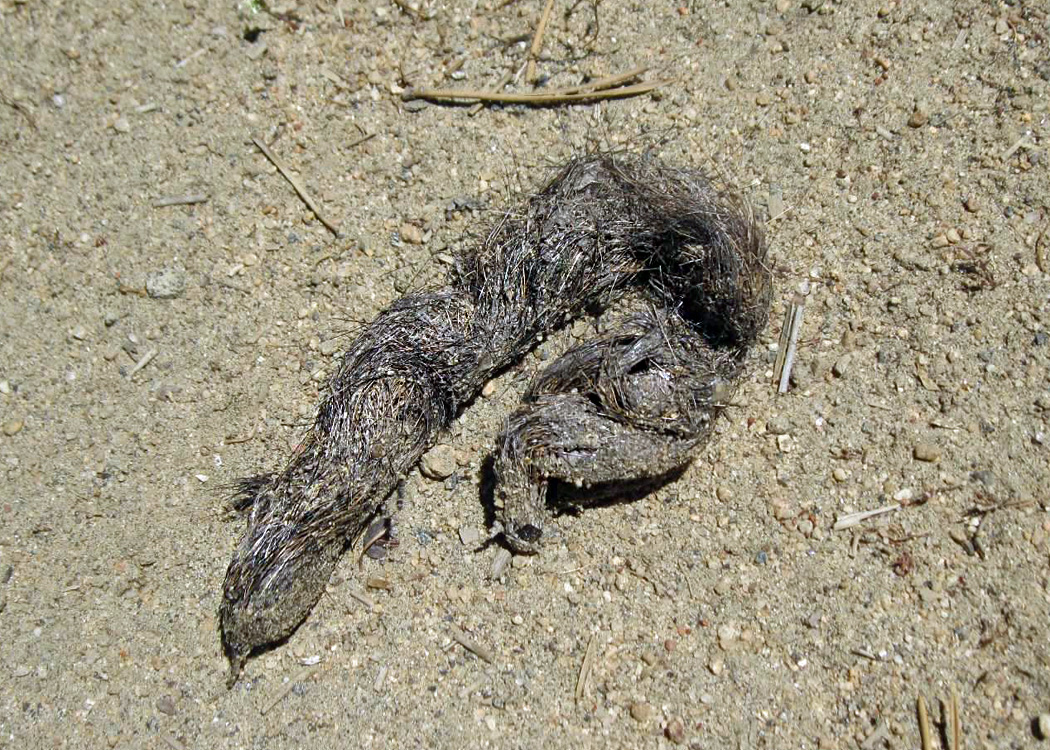
A light breeze cooled me as I walked through a warm, sunny stretch. On the trail, there was a clear sign that I was sharing the area with a mountain coyote.
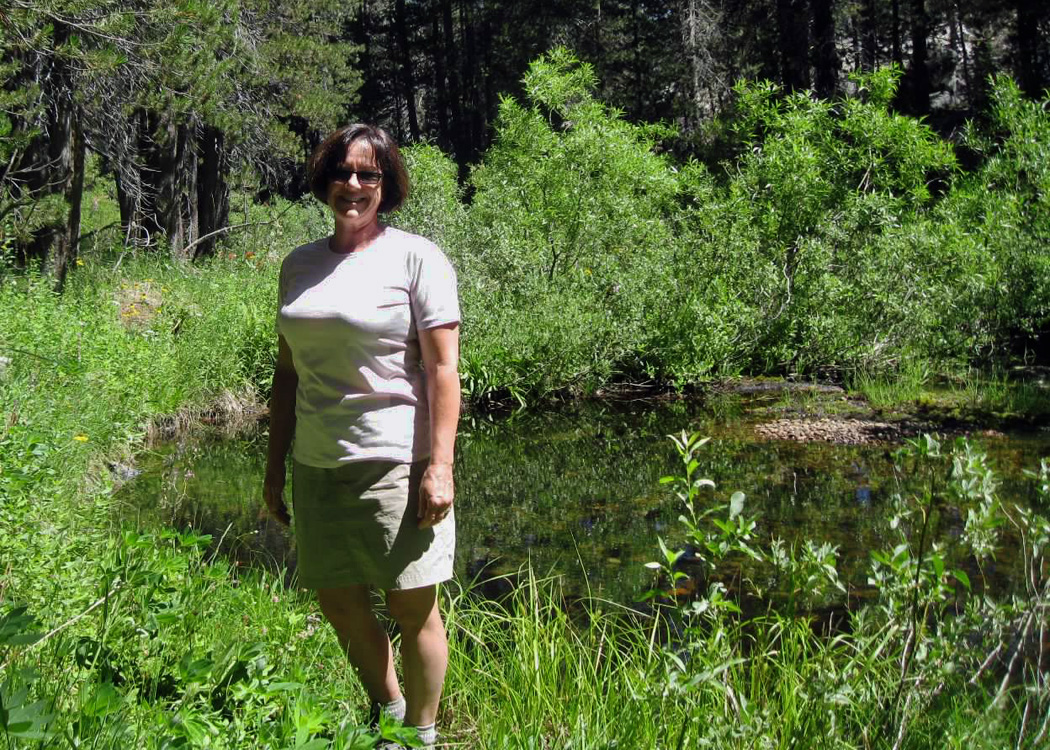
I reached the end of the route at Bridalveil Creek Campground. Rather than continuing to make a loop hike, which would have required walking on the busy Glacier Point Road, I decided to turn back and retrace my steps. I paused at a clearing and headed down to the creek for a brief break. Bridalveil Creek runs from Ostrander Lake to Bridalveil Fall in Yosemite Valley.
While retracing my steps through the shady forest, I discovered delicate smooth-stemmed fireweed thriving in a wet area near the creek—a close relative of the larger fireweed.

I always relish having an area to myself, but in a forest bustling with wildlife, both seen and unseen, I am never truly alone.


I loved this one, Janet! So much traffic (both human on horses, and of course the animals and birds!). Just be very careful, after Vicky Cardell’s death, I really worry about rattlesnakes! (Colette told Mike on Sunday, that she heard that Vicky had so many allergies that perhaps they couldn’t give her much of the anti-venom drugs!) Either way, please be very careful!
Love & hugs,
M
LikeLike
Heart-breaking about Vicky. I have yet to see a rattler though I’ve seen several other types of snakes. I will be careful. Thanks for the comment, Marlene.
LikeLike
I’m sticking my oar in here because a friend’s son recently suffered a rattlesnake bite on a trail in the Santa Barbara foothills. They evacuated him perfectly but the pharmacist at the hospital didn’t realize the urgency of defrosting the antivenin so his doses were not triaged with urgency. He survived but the event caused far more damage and pain than strictly necessary. Should you ever be in a position to need to know this, it is worth gentle but firm harassment of ER staff to ensure that there are no delays in administrating the antivenin. It makes a big difference if you wait another two hours instead of twenty minutes. I don’t know if anything of this sort happened with Vicky, but this boy’s case leapt to mind when I read your comment. I believe snakebite is so uncommon that staff do not always understand the protocols, and they have no time to go looking it up with the inflow of urgent cases that they cope with!
LikeLike
Good information to know, Robin. Thank you. And I’m sorry about your friend’s son. I hope he heals soon.
LikeLike
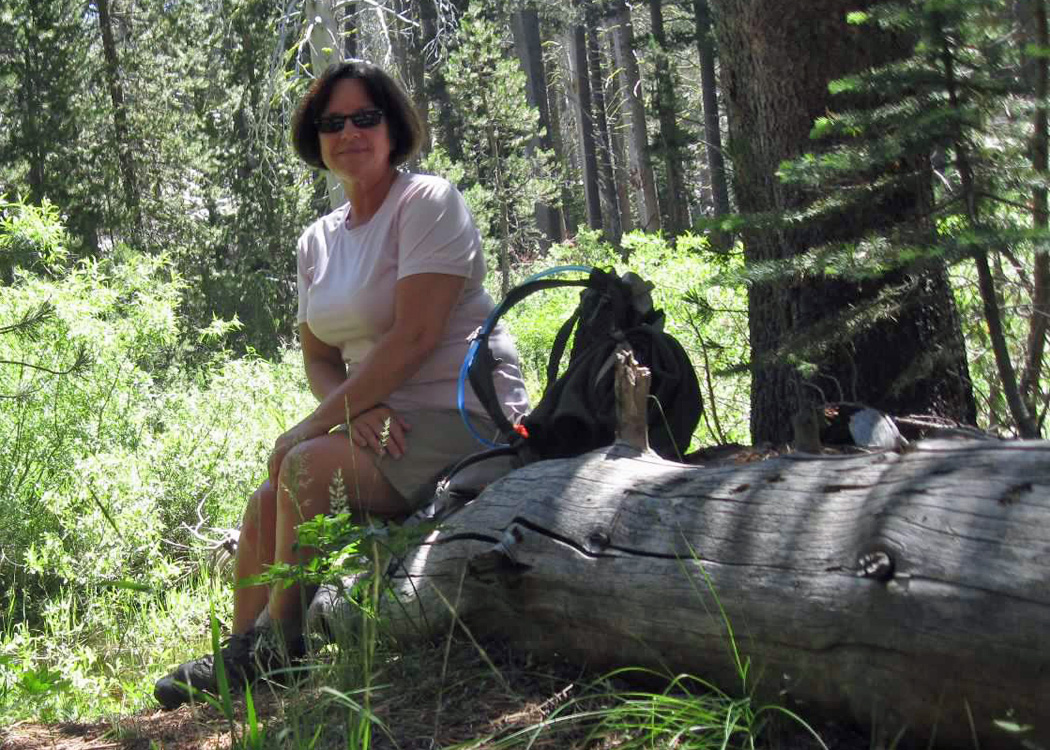
Did you get one of the animals out there to take that last photo for you?
LikeLike
Yes, the bear. 🙂 Actually, I have learned to use the self-timer on the camera. I take about 5 shots before 1 comes out well though.
LikeLike
Lovely. (Even the bear scat!)
LikeLike
An actual bear photo would have been nicer. 🙂
LikeLike
It was like reading “who pooped in the park?”
LikeLike
Funny. 🙂 A friend laughs at me because I like looking at the poop; but that way I know what’s around.
LikeLike
I love following along and seeing the flowers and even the scat upon the way! Thank you. It looks like we may not make it out on a real camping trip this year, so it is particularly dear to see your flowers and trails through the land.
LikeLike
Thank you, Robin. Maybe things will work out and you’ll get in a quick trip…I hope so.
LikeLike
I got a kick out of this one. The pictures of all the new flowers were great. And you’ve got to love the English language with so many definitions for the word “scat”:
> to go away quickly
> an animal fecal dropping
> jazz singing with nonsense syllables
> School and College Ability Test
> supersonic commercial air transport
The coyote scat was particularly interesting. I wonder what animal that used to be. 🙂
Dad
LikeLike
🙂 I hadn’t heard of the last two definitions.
LikeLike
Just a beautiful portrayal of a nature lover’s paradise. It made me wish to be there!
LikeLike
Thanks, Carol. 🙂
LikeLike